Mark Hamill on playing Luke Skywalker in Star Wars: The Last Jedi | British GQ
Mark Hamill talks to GQ’s Stuart McGurk about the question he hears the most often: ‘did he ever expect Star Wars to be so successful?’ before demonstrating his Chewbacca wail, professing his admiration for Benedict Cumberbatch and remaining silent on whether he uses a light saber in the new film. Mark Hamill is GQ’s Icon of the Year at the 2017 Men of the Year awards in partnership with Hugo Boss. Subscribe to British GQ►► http://po.st/SubscribeBritishGQ CONNECT WITH BRITISH GQ Web: http://po.st/BritishGQ Twitter: http://po.st/TwitterBritishGQ Facebook: http://po.st/FacebookBritishGQ Google+: http://po.st/GoogleBritishGQ Instagram: http://po.st/InstagramBritishGQ Newsletter: http://po.st/NewsletterBritishGQ ABOUT BRITISH GQ British GQ is the premier channel for men’s style, lifestyle and entertainment. Every week brand new series, original documentaries and essential style guides make it the first port of call for living well and looking good for men. Mark Hamill on playing Luke Skywalker in Star Wars: The Last Jedi | British GQ https://www.youtube.com/user/GQRecomm…
Here is a movie that could save you years of watching the Late Late Show; it’s like Creature Features died and went to heaven. “It Came from Hollywood” is a 90-minute guided tour through the worst parts of nearly 100 of the worst movies ever made, from “The Amazing Colossal Man” to “Zombies of the Stratosphere.” It turns “That’s Entertainment!” into “That’s Entertainment???” And now that I’ve finished with my cornball one-liners, let’s get on to the movie.
But “It Came from Hollywood” goes beyond the Medveds to encompass whole genres of awfulness. It uses montages to show us wave upon wave of flying saucers, tray upon tray of human brains, attack upon attack by savage beasts, and a sequence in which a series of utterly unconvincing giant insects stumble jerkily over cardboard cities.
My favorite scenes in the movie, however, are not the moments that are obviously awful, but those moments which are awful in spite of themselves; scenes in which the actors are really trying, but don’t have a chance. There is a pseudo-Busby Berkeley dance number, for example, in which several very badly rehearsed dancers get totally out of synch with each other and start jostling for position in a chorus line while inflatable bananas take over the background.
And then there’s a classic scene where a young engaged couple goes to see the doctor, and he greets them cheerfully, telling the woman there are no complications resulting from the birth of her baby and telling the man his case of V.D. cleared up fine. The man shouts at his intended: “You’ve had a baby?” She replies, “You’ve had one of those awful diseases?” He says, “One scandal at time.”
The movie has been assembled by Malcolm Leo and Andrew Solt, who have made a specialty of compilation films. Their credits include “Heroes of Rock and Roll” and the remarkable “This Is Elvis,” in which documentary footage and film and TV clips created an uncanny portrait of Elvis Presley’s rise and fall.
This time they organize their material into segments introduced by Dan Aykroyd, John Candy, Cheech and Chong and Gilda Radner –whose names are exploited in a very bad advertising campaign that for some reason chooses to obscure the fact that this is a film of highlights from bad films.
The hosts are all right in their introductory segments; Radner has a great moment barricading her door against gorillas, and Aykroyd turns up in Glen (or Glenda’s) white angora sweater. But the movie makes the annoying decision to let the hosts speak during the scenes from the bad movies, one-upping the original footage with wiseguy comments that should be left for the paying audience to make.
Something else bothers me: At times, I got the impression that the filmmakers were adding things to the original soundtracks to make them “funnier,” as when a hairy monster burps after eating a victim. Surely these movies are funny enough in themselves. Consider some of their titles: “Attack of the Killer Tomatoes,” “The Brain from Planet Areas,” “The Crawling Eye,” “Horror of Party Beach,” “I Married a Monster from Outer Space,” “Incredible Melting Man,” “Incredibly Strange Creatures Who Stopped Living and Became Mixed-Up Zombies,” “Mars Needs Women,” “Slime People” and, of course, “Teenagers from Outer Space.”
“Incredibly Strange Creatures Who Stopped Living and Became Mixed-Up Zombies,” “Mars Needs Women,” “Slime People” and, of course, “Teenagers from Outer Space.”
There is some really awesome miniatures work in this documentary. This is way better than most “behind the scenes” videos that are really just commercials for the movie.
Gordon Carroll, David Giler, and Walter Hill of Brandywine Productions, who produced the first film and its later sequels, served as executive producers on Aliens. They were interested in a follow-up to Alien as soon as its 1979 release, but the new management at 20th Century Fox postponed those plans until 1983. Brandywine picked Cameron to write after reading his script for The Terminator; when that film became a hit in 1984, Fox greenlit Aliens with Cameron as director and a budget of approximately $18 million. It was filmed in England at Pinewood Studios and at a decommissioned power plant in Acton, London.
A sequel, Alien 3, was released in May 22, 1992, with Weaver’s reprising her role as Ellen Ripley and Henriksen as Bishop in the film.
Visual effects
Brothers Robert and Dennis Skotak were hired to supervise the visual effects, having previously worked with Cameron on several Roger Corman movies. Two stages were used to construct the colony on LV-426, using miniature models that were on average six feet tall and three feet wide.[31] Filming the miniatures was difficult because of the weather; the wind would blow over the props; however, it proved helpful to give the effect of weather on the planet. Cameron used these miniatures and several effects to make scenes look larger than they really were, including rear projection, mirrors, beam splitters, camera splits and foreground miniatures. Due to budget limits, Cameron said he had to pay for the robotic arm used to cut into Ripley’s shuttle in the opening scene.[31][32]Practical effects supervisor John Richardson (who won a special effects Oscar for his part in the film) declared his biggest challenge was creating the forklift power loader exoskeletons, which required only three months of work and had Cameron complaining about visual details during construction. The model could not stand on its own, requiring either wires dangling from the shoulders or a pole through the back attached to a crane. While Sigourney Weaver was inside the power loader model, a stunt man standing behind it would move the arms and legs.[29]
The alien suits were made more flexible and durable than the ones used in Alien to expand on the creatures’ movements and allow them to crawl and jump. Dancers, gymnasts, and stunt men were hired to portray the aliens. Various 8 feet (2.4 m) tall mannequins also were created to make aliens that stood in inhuman poses, and could have their bodies exploded to simulate gunshot wounds. Stan Winston’s team created fully articulated facehuggers that could move their fingers; these were moved by wires hidden on the scenery or the actors’ clothing. The one that walked towards Ripley had a mechanism akin to a pull toy, with pulleys that moved the fingers, and its jump combined three models shot separately: the walking facehugger, a stationary model dangling on a table leg, and another model being pulled towards the camera.[30]
According to production staff, scenes involving the alien queen were the most difficult to film. A life-sized mock-up was created by Stan Winston‘s company in the United States to see how it would operate. Once the testing was complete, the crew working on the queen flew to England and began work creating the final version. Standing at 14 feet (4.3 m) tall, it was operated using a mixture of puppeteers, control rods, hydraulics, cables, and a crane above to support it. Two puppeteers were inside the suit operating its arms, and 16 were required to move it. All sequences involving the full size queen were filmed in-camera with no post-production manipulation.[31] Additionally, a miniature alien queen was used for certain shots.
After Bill Paxton‘s unexpected death, the cause of his passing has been revealed.
While a representative of Paxton’s family confirmed that the Big Love star died on Feb. 25 following “complications from surgery,” according to the 61-year-old’s death certificate obtained by E! News, he suffered a stroke stemming from surgery a week earlier.
On Feb. 14, Paxton underwent a valve replacement and aortic aneurysm repair. According to the certificate, the actor later experienced an aortic aneurysm that lead to his deadly stroke. The husband and father died at Cedars-Sinai Medical Center in Los Angeles.
What can Blade Runner teach us about the art of filmmaking? 1982 was a big year for movies—an existential cyberpunk noir film had a tough time competing with Spielberg’s lovable E.T. and yet, Blade Runner has not only stood the test of time, but it is arguably more popular now than it has ever been. Join me as I take an in-depth look at the construction of Ridley Scott’s Blade Runner and how its cinematography techniques created such a fascinatingly detailed world. This video is on The Final Cut version of the film.
“The worst thing you can do is purchase a camera on a credit card.”
Before you make that big camera purchase, Sareesh Sudhakaran (AKA Wolfcrow) has some cautionary advice. His most salient point: You don’t need a camera if you aren’t planning to make a movie immediately.
Still really want that camera? Only buy it if you have a detailed plan for how it can make you money.
Sudhakaran argues that, contrary to popular opinion, cameras are not really an investment. That’s because once you buy a camera, it loses value immediately.
“A camera has a certain time period after which it is no longer lucrative,” Sudhakaran says. “A camera today is only good for about two years. After two years, the manufacturer will release an upgrade or new model. By the third year, the camera starts to feel and look old. Clients won’t want it.”
Due to this certain depreciation in value, Sudhakaran says the worst thing you can do is purchase it on a credit card that charges interest. You’ll want to make your money back in two years; after two years, you can resell your camera at 40-50% of the original purchase price. And in the interim, you’re going to have to charge clients a premium to make that camera purchase financially worthwhile.
Sudhakaran also points out that camera-hungry newcomers don’t always understand hidden costs, such as maintenance, insurance, or travel permits.
So before you buy that shiny new gear, make sure you have a solid money-making plan and have done your due diligence about hidden costs.
Not only do Title Sequences tell you the name of the film and the stars, they can also set the tone and mood and put you in the right frame of mind to experience the film or TV show to come. Explore the history of the title sequence and how they’ve evolved along with business of filmmaking over the past century. If you have any further questions – check out our questions page:
George A. Romero, who launched the zombie film genre with his 1968 “Night of the Living Dead,” died on Sunday, Variety has confirmed. He was 77.
The director died in his sleep following a battle with lung cancer, according to a statement from his manager Chris Roe.
“Legendary filmmaker George A. Romero passed away on Sunday July 16, listening to the score of ‘The Quiet Man,’ one of his all-time favorite films, with his wife, Suzanne Desrocher Romero, and daughter, Tina Romero at his side,” the statement said. “He died peacefully in his sleep, following a brief but aggressive battle with lung cancer, and leaves behind a loving family, many friends, and a filmmaking legacy that has endured, and will continue to endure, the test of time.”
Made in Pittsburgh on a budget of $114,000, “Night of the Living Dead” made $30 million and became a cult classic. Romero’s friends and associates in his Image Ten production company pooled their funds to make the film. Influenced by Richard Matheson’s novel “I Am Legend,” the black and white film about a group of people trapped in a Pennsylvania farmhouse who fall prey to a horde of the undead was said to be a critique of capitalism during the counter-culture era.
After “Night of the Living Dead,” he directed films including “There’s Always Vanilla,” “Season of the Witch,” and “The Crazies,” although none had the impact of his first film. His 1977 vampire arthouse pic “Martin” was somewhat more well-received.
He went back to zombies with “Dawn of the Dead,” which made more than $55 million on a half a million dollar budget, then made his third Dead movie with “Day of the Dead” in 1985.
His non-zombie films of that period gained more attention, including “Knightridgers” about jousters who re-enact tournaments on motorcycles and the anthology “Creepshow” written by Stephen King.
Among his other films from the 1980s and 1990s were “Monkey Shines,” Edgar Allen Poe adaptation “Two Evil Eyes,” in collaboration with Dario Argento, “The Dark Half’ and “Bruiser.”
RELATED
He exec produced and updated his own screenplay for Tom Savini’s 1990 remake of “Night of the Living Dead.” He made a cameo appearance in “The Silence of the Lambs.” Romero was originally set to direct “Resident Evil,” but left the project due to creative differences.
His fourth Dead movie “Land of the Dead” was made in Toronto in 2005, starring Simon Baker, Dennis Hopper, Asia Argento and John Leguizamo.
He followed that with “Diary of the Dead” in 2008 and “Survival of the Dead” in 2010. He also worked on video games and wrote comic books.
Born in the Bronx, Romero’s father was Cuban and his mother Lithuanian. He graduated Carnegie Mellon University in Pittsburgh, then began shooting shorts and commercials, including a segment of “Mr. Rogers Neighborhood.”
He is survived by his wife Suzanne and two children.
keywords: george a. romero, obituary, night of the living dead, horror, zombies, dawn of the dead, independent film
Saugata Ghosh, age 34, of Austin, Texas passed away on July 9, 2017.He was born April 20, 1983 in Contat, West Bengal, India to Narayan and Dharitri Ghosh. He married Rakhi Bhattacharjee on June 18, 2008. Saugataworked as a Data Architect for Stonebridge Acquisition in Tulsa, Oklahoma.
Survived by wife, Rakhi Bhattacharjee, and his parents.
Funeral services were held on Friday, July14, 2017 at 3:00 pm in the chapel of Ramsey Funeral Home.
His family and friends gathered at Ramsey Funeral Home in Georgetown, Texas to remember and praise this remarkable man.
I was hired to make a video documentary of this Funeral /Memorial Service, July 14 2017.
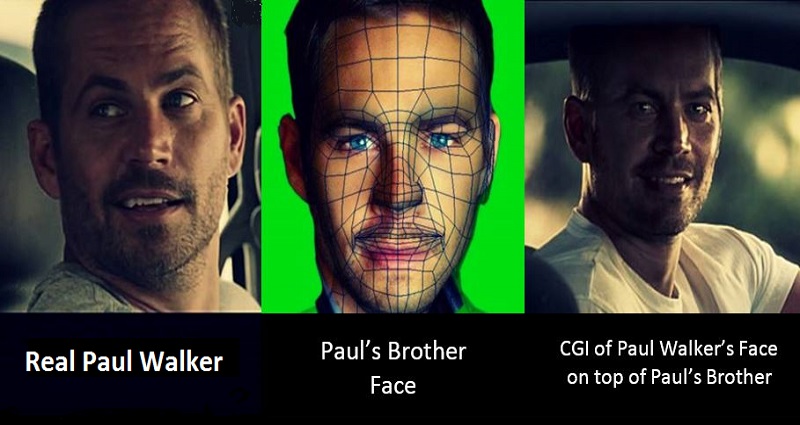
Theres lots of older movies that get digitally remastered / enhanced “special editions.” And many new Hollywood hits use face replacement technology- to put stars faces onto stunt performers etc…
When the greatest Asian Martial Arts star ever, Bruce Lee, died leaving his last film ” Game of Death” unfinished, the producers TRIED to save the project with body doubles and awful 1970s face replacement technology:
By todays standards, it is laughably bad.
I would like to suggest that whoever has the rights to the original master footage of Game of Death partners up with ILM or whoever and make a special edition. Replace Lees face with state of the art CGI, clean up and remaster the rest of film, and maybe even make it 3D.
Now, I don’t think facial replacement technology is quite where it should be – yet. They’re getting closer to reality. Tarkin and Lei came close, but there is something inescapably difficult to capture about the human face that even the best efforts look a little…. goofy. I think Lee would be worth the effort.
Bruce Lee is still thought of as one the greatest movie stars in the world. I think a “new” 3D film starring the Legendary Bruce Lee would be a huge hit in Asia, America and most of the world. They would more than make their money back and then some.
This is a whiskey commercial with a CGI Bruce Lee that comes REALLY close:





 Bruce Lee is still thought of as one the greatest movie stars in the world. I think a “new” 3D film starring the Legendary Bruce Lee would be a huge hit in Asia, America and most of the world. They would more than make their money back and then some.
 mattkprovideo