<a href=”http://
“>
<a href=”http://
“>
To celebrate the 40th anniversary theatrical re-release of ‘Monty Python and the Holy Grail’ and the release of the 40th anniversary Blu-Ray, DVD & limited edition castle gift set we’ve put together this video of Terry Gilliam’s lost animations from the film.

http://www.animationsource.org/bambi/en/info_general/&id_film=50
Bambi initially came out in theaters of North America on August 20th of 1942. However, because of the Second World War, it’s release was delayed for more than 5 years in Europe and only came out in 1947.
The movie had to directly succeed to Snow White, but was postponed due to diverse budgetary setbacks as well as for artistic qualifications – Walt wishing to obtain a highly more realistic look than the previous productions. Thus, the producers and animators had a lot ahead to do! The circumstances have permitted the releases of other movies before Bambi: Dumbo, Pinocchio and Fantasia. Nevertheless, Bambi had more success than these animated features and is since, one of the most acclaimed classics productions of the history of traditional animation and considered as being the favorite of Walt Disney himself.
The cartoon movie, arises from an adaptation of Felix Salten’s novel – An Hungarian novelist:
Bambi: A life in the woods, was initially only available in it’s written language. The novel was later on translated in English in 1928. The animated movie realized by Disney largely differs from it’s source of inspiration (considered too rough to suit the targeted public), but it did not prevent the foil of the story’s main themes: love, mourning and membership.
A low-budget ”sequel” directly went out on the market in 2006, more than 64 years after the original. It resumes the events being directly situated after Bambi’s mother death…
Five years were necessary to create Bambi, a movie during 75 minutes. 250 persons collaborated, among 50 draftsman and 37 animators.
When we are viewing the movie, 100 800 drawings scroll under our eyes. 450 000 Celluloids or Cellos (transparent supports on which are drawn the drawings) were held for animation: More than 4 millions were created! Less than 900 words are pronounced, while the book holds approximately 10 000.
One of the most terrifying sequences of the movie is certainly the forest fire. The violence of flames, the noise of wood that burns seems more true than ever. Bambi must learn to dominate the pain of his wounds, caused by a hunter. To make a success of such scenes, Walt Disney appealed to the person in charge of the special effects, Jim Mac Donald – who was the second voice for Mickey, after Walt. To reproduce the noise which destroys the tree trunks and foliages, Jim used wooden crates. To recreate the thunder, he shook chains on a big sheet of steel. To imitate the shiver of a spider web, a tiny and little usual sound, after many researches, Jim slowly shook sheets of duralumin, a hard and light metal compound of aluminum and copper.
When Walt Disney dashed into the making process of Bambi, an official organism of the region’s waters and forests offered him two fawns to serve as models for the story’s heroes: Bambi and Faline. They grew during the making of the movie. All the studio’s artists and animators observed and tamed them in order to be able to draw them with perfection.
” In a cartoon, it’s the movement that subsidize. The dialogue must only be employed with extreme moderation. The gestures of the characters can come along with some words but it’s the movements that counts, not the words ” Walt Disney

https://en.wikipedia.org/wiki/The_Tortoise_and_the_Hare
http://www.tcm.com/this-month/article/28065%7C28069/The-Tortoise-and-the-Hare.html

Ray HarryHausens Stop Motion short “Tortoise and Hare”
I was hired to shoot and edit these web commercials for a new app “myboxnine”
http://www.myboxnine.com/boxnine/
Shot on a Canon T3I, a tripod, slider, lavalier mike and some after effects animation!
We made the first one:
And then I had the idea to re-use some leftover footage to make a second one:
I photoshopped the graphics for this video but I did NOT design them, this person did:
https://www.behance.net/gallery/28369661/Box-Nine-Branding-ID-Logo
 Graphics altered in Adobe Photoshop and added to video edited in Adobe Premiere ( and After Effects) for the company “myboxnine.com”
Austin Texas Motion Graphics After Effects

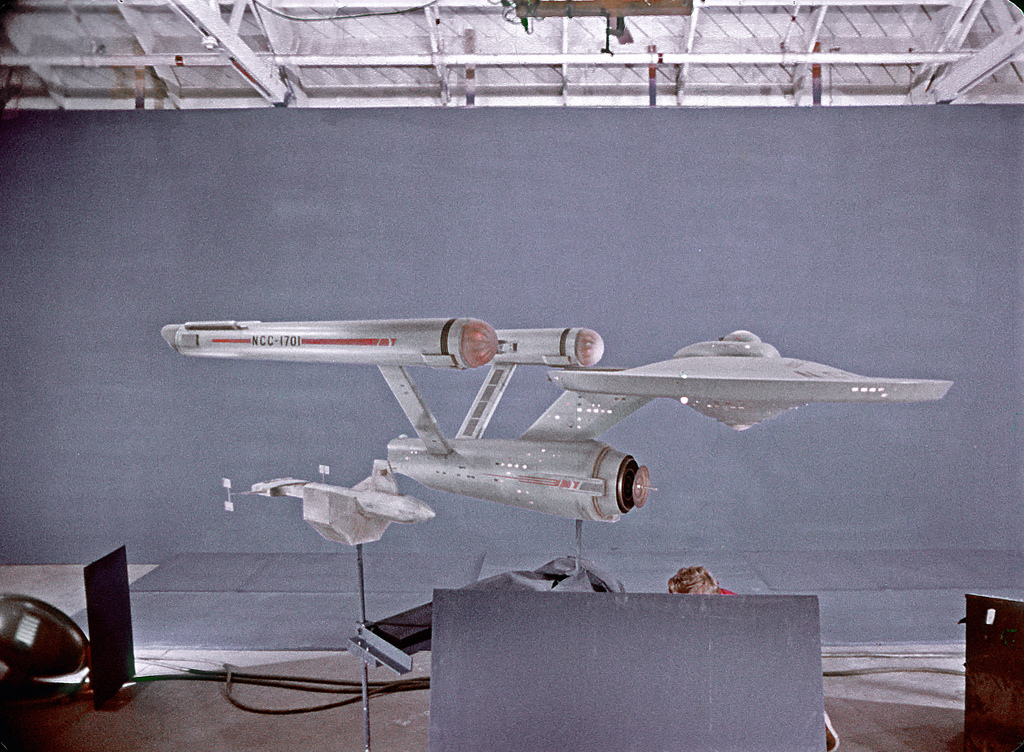
https://en.wikipedia.org/wiki/USS_Enterprise_(NCC-1701)

An 11-foot (3.4 m) model donated by Paramount to the Smithsonian in 1974[4]
Star Trek art director Matt Jefferies was the primary designer of the original Enterprise, which was originally namedYorktown in series creator Gene Roddenberry‘s first outline drafts of the series.[5] Jefferies’ experience with aviationled to his Enterprise designs being imbued with what he called “aircraft logic”. However, Jefferies years later confessed to have taken some inspiration and artistic license from electric stove coils.[6]
The ship’s “NCC-1701” registry number stemmed from “NC” being one of the international aircraft registration codes assigned to the United States; the second “C” was added for differentiation.[citation needed] According to The Making of Star Trek, “NCC” is the Starfleet abbreviation for “Naval Construction Contract”, comparable to what the U.S. Navy would call a hull number.[7] The “1701” was chosen to avoid any possible ambiguity; according to Jefferies, the numbers 3, 6, 8, and 9 are “too easily confused”.[8] Other sources cite it as a reference to the house across the street from where Roddenberry grew up,[9] while another account gives it as the street address of Linwood Dunn.[10] Jefferies’ own sketches provide the explanation that it was his 17th cruiser design with the first serial number of that series: 1701.[11] The Making of Star Trek explains that “USS” should mean “United Space Ship” and that “the Enterprise is a member of the Starship Class”.[7]
The first miniature built for the pilot episode “The Cage” (1965) was unlit and approximately 3 feet (0.9 m) long. It was modified during the course of the series to match the changes eventually made to the larger miniature, and appears on-set in “Requiem for Methuselah” (1969). The second miniature built for the original pilot measures 11 feet 2 inches (3.4 m) long and was built by a small crew of model makers (Volmer Jensen, Mel Keys, and Vernon Sion) supervised by Richard Datin, working out of Jensen’s model shop in Burbank, California. It was initially filmed by both Howard A. Anderson and Linwood G. Dunn at Dunn’s Film Effects of Hollywood facility, who also re-filmed later more-elaborate models of the ship, generating a variety of stock footage that could be used in later episodes.[citation needed]
Initially, the model was static and had no electronics. For the second pilot, “Where No Man Has Gone Before” (1966), various details were altered, and the starboard window ports and running lights were internally illuminated. When the series was picked up and went into production, the model was altered yet again. These alterations included the addition of translucent domes and blinking lights at the forward ends of the engine nacelles, smaller domes at the stern end of the engine nacelles, a shorter bridge dome, and a smaller deflector/sensor dish. Save for re-used footage from the two pilot episodes, this was the appearance of the ship throughout the series. The 11 feet (3.4 m) model is undergoing restoration,[12] having previously been displayed in the Gift Shop downstairs at the Smithsonian Institution‘s National Air and Space Museum in Washington, D.C.[13]
Greg Jein created a model of the original Enterprise for the Star Trek: Deep Space Nine episode “Trials and Tribble-ations” (1996). Jein’s model was built to be exactly half the size of the larger of the two original models, and later appeared in the 1998 Star Trek wall calendar. In addition, a CGI model of the ship makes a brief cameo appearance at the end of the final episode of Star Trek: Enterprise, “These Are the Voyages…” (2005), and another CGI version was created for remastered episodes of the original Star Trek, based on the model in the Smithsonian.[citation needed]
I am curious about this video
Its a “classic” rap song from the 80s BUT- while the photos and graphic style are from that era, the motion and editing seem like its from the 2000’s at least.
Its composed 4:3 instead of 6:9, so it says to me it was done before Hi Def completely took over, maybe this is a fan video made after the 80s but before HD.

made in FLASH and AFTER EFFECTS.
Song by BRUTHA MAGNUM and the RAZOR BUMPS!
 mattkprovideo